
🇫🇷 Français | 🇬🇧 English | 🇩🇪 Deutsch
Dieser Artikel widmet sich der Geschichte des berühmten Tiger I 007 der schweren SS-Panzer-Abteilung 101 und seiner Besatzung unter dem Kommando des bekannten deutschen Panzerkommandanten Michael Wittmann. Im Mittelpunkt stehen die letzten Einsätze dieses Tiger-Panzers, die Kämpfe in der Normandie im Jahr 1944 und die Ereignisse, die schließlich zur Zerstörung des Tiger „007“ und zum Tod seiner Besatzung führten.
Der Artikel beleuchtet außerdem die Geschichte der Besatzung von Michael Wittmann, die Umstände ihres Verschwindens und die jahrzehntelange Suche nach den sterblichen Überresten der Männer. Erst 1983 wurden die Überreste der Besatzung wiederentdeckt und anschließend auf dem deutschen Soldatenfriedhof von La Cambe in der Normandie beigesetzt.
Der deutsche Soldatenfriedhof La Cambe ist ein Ort, den ich bereits lange vor der Gründung dieses Blogs besucht habe. Die Geschichte des Tiger 007, seiner Besatzung und die Ereignisse rund um seine Zerstörung gehören zu den bekanntesten Kapiteln der deutschen Panzerkriegsgeschichte in der Normandie.
Wer war Michael Wittmann? Der berühmte Tiger-I-Kommandant der Waffen-SS
Michael Wittmann wurde am 22. April 1914 in Vogelthal geboren.
 |
| Michael Wittmann in die Leibstandarte SS "Adolf Hitler" |
Michael Wittmann begann seine militärische Laufbahn am 30. Oktober 1934 mit seinem Eintritt in die Wehrmacht. Bis zum 30. September 1936 diente er beim Infanterie-Regiment 19. Am 1. November 1936 trat er in die Leibstandarte SS Adolf Hitler ein und wurde als SS-Mann unter der SS-Nummer 311 623 geführt.
Am 11. November 1937 wurde Wittmann zum SS-Sturmmann befördert. Am 20. April 1939 folgte die Beförderung zum SS-Unterscharführer. In den folgenden Jahren setzte er seinen Dienst innerhalb der Waffen-SS fort und stieg am 9. November 1941 zum SS-Oberscharführer auf.
Nach seiner Ausbildung an der SS-Junkerschule in Bad Tölz wurde Wittmann am 21. Dezember 1942 zum SS-Untersturmführer befördert. Im März 1943 diente er als SS-Untersturmführer bei der 13./SS-Panzer-Regiment 1 der 1. SS-Panzer-Division Leibstandarte SS Adolf Hitler.
Am 30. Januar 1944 wurde Wittmann zum SS-Obersturmführer befördert. Wenige Monate später, am 21. Juni 1944, folgte seine Beförderung zum SS-Hauptsturmführer. Gleichzeitig übernahm er das Kommando über die 2./schwere SS-Panzer-Abteilung 101.
Im August 1944 wurde Wittmann schließlich mit der Führung der schweren SS-Panzer-Abteilung 101 beauftragt. Zu diesem Zeitpunkt standen die schweren Panzerverbände der Waffen-SS in den schweren Abwehrkämpfen in der Normandie.
Am 8. August 1944 verschwand Michael Wittmann zusammen mit seiner Besatzung während der Kämpfe bei Gaumesnil, nahe Cintheaux, in der Normandie. Sein Tiger I mit der Turmnummer 007 wurde gegen 12:55 Uhr zerstört. Wittmann und seine Besatzungsmitglieder galten seit diesem Zeitpunkt als vermisst. Trotz umfangreicher Nachforschungen konnten ihre sterblichen Überreste zunächst nicht aufgefunden werden.
Erst beinahe vier Jahrzehnte später sollte das Schicksal der Besatzung geklärt werden. Am 23. März 1983 entdeckte ein Landwirt beim Pflügen eines Feldes menschliche Knochen und verständigte die Behörden. Damit wurden die sterblichen Überreste der Besatzung des Tiger 007 nach fast vierzig Jahren wiedergefunden.
Am Ort der Zerstörung kamen zugleich zahlreiche persönliche Gegenstände zum Vorschein. Unter den Funden befanden sich eine Lederjacke, eine schwarze Panzeruniform, ein SS-Offizierskoppel, eine Pistole des Kalibers 6,35 mm sowie Teile einer Funkhörgarnitur. Außerdem wurden Kleidungsstücke der Luftwaffe gefunden, die vermutlich Günther Weber zugeordnet werden konnten. Hinzu kamen Erkennungsmarken und Teile der Skelette der Besatzungsmitglieder.
Der Tiger 007 der schweren SS-Panzer-Abteilung 101
Wie die beiden folgenden Darstellungen zeigen, gehen die Meinungen über die tatsächliche Tarnfarbe von Michael Wittmanns Tiger I mit der Turmnummer 007 bis heute auseinander. Historiker, Modellbauer und Militärfahrzeugexperten vertreten hierzu unterschiedliche Auffassungen.
Tatsächlich war der Tiger 007 ursprünglich der Kommandopanzer des Kommandeurs der schweren SS-Panzer-Abteilung 101, SS-Sturmbannführer Heinz von Westernhagen. Dieser fiel am 20. März 1945 während der Kämpfe in Ungarn.
 |
| Tiger
205 von Michael Wittmann während des Vormarsches an die Invasionsfront.
SS-Sturmmann Boldt gehört zur Besatzung. Die Luken sind geöffnet,
Wittmann befindet sich im Turm. |
Der offiziell Michael Wittmann zugeteilte Panzer war hingegen der Tiger I mit der Turmnummer 205. Im Verlauf der Kämpfe in der Normandie übernahm Wittmann jedoch den Tiger 007, der später zu einem der bekanntesten Panzer des Zweiten Weltkriegs werden sollte.
Die Turmnummer 007 ist heute untrennbar mit Michael Wittmann und den Ereignissen des 8. August 1944 bei Gaumesnil verbunden, als der Panzer während der Normandie-Schlacht zerstört wurde.
Wie Sie sehen können, gehen die Meinungen in der Fachliteratur und in Zeitschriften hinsichtlich der Tarnung des Tiger I 007 auseinander.


Die Besatzung des Tiger 007
Am 8. August 1944 bestand die Besatzung des berühmten Tiger I mit der Turmnummer 007 aus fünf Männern der schweren SS-Panzer-Abteilung 101. Gemeinsam mit Michael Wittmann gehörten sie zu den erfahrenen Panzerbesatzungen, die während der Kämpfe in der Normandie eingesetzt wurden.
 |
| Der Panzerkommandant Michael Wittmann |
 |
| Die anderen Besatzungsmitglieder des Tiger 007. Von links nach rechts: Karl Wagner, Richtschütze; Rudolf Hirschel, Funker; Heinrich Reimers, Fahrer des Panzers. Keine Aufnahme von Günther Weber, Ladeschütze. |
Panzerkommandant
SS-Hauptsturmführer Michael Wittmann
Fahrer
SS-Unterscharführer Heinrich Reimers
20 Jahre alt. Geboren am 11. Mai 1924 in Schnepke.
Richtschütze
SS-Unterscharführer Karl Wagner
24 Jahre alt. Geboren am 31. Mai 1920 in Eppisburg.
Ladeschütze
SS-Sturmmann Günther Weber
Ehemaliger Angehöriger der Flakartillerie der Luftwaffe.
19 Jahre alt. Geboren am 21. Dezember 1924 in Sprockhövel.
Funker
SS-Sturmmann Rudolf Hirschel
24 Jahre alt. Geboren am 3. Januar 1920 in Gleiwitz.
Die Zerstörung von Tiger 007 am 8. August 1944
Lage:
Feind hat Hauptkampflinie in der Normandie durchbrochen. Angriffsrichtung Falaise. Operation „Totalize“.
Luftlage:
07./08.8.1944. 1.020 feindliche Bomber im Einsatzraum. Ziel: Vorbereitung Offensivraum. 10 Abschüsse durch Flak.
Bodenlage:
51. Division nimmt während Nacht Garcelles, Saint-Aignan-de-Cramesnil, Cramesnil. Vorstoß nach Süden. Waldgebiete besetzt. 89. Inf.Div. Linie mehrfach durchbrochen.
 |
| Karte der deutschen Gegenoffensive, die vielen Panzersoldaten, darunter auch Michael Wittmann, das Leben kosten wird. |
Gegenstoß RN 158:
12:30 Uhr. Cintheaux. 6 Tiger I der schweren SS-Pz.Abt. 101 Angriff über RN 158 Richtung Nord. Unterstützung: 12. SS-Pz.Div. "Hitlerjugend", Panzer IV, Infanterie, Werfer-Regiment 83.
Gaumesnil westlich der Bewegungsachse.
Gelände: flach, jedoch Waldgebiet rechte Flanke.
Gefechtsverlauf Gaumesnil:
Feindliche Panzerkräfte (Sherman Firefly) bei Gaumesnil unbekannt. Zangenlage rechts/links Straße.
Feuereröffnung aus vorbereiteten Stellungen auf vorrückende Tiger.
Verluste:
– 2 × Tiger I vernichtet
– 1 × Tiger I kurz darauf vernichtet
– 2 × Panzer IV vernichtet
– weitere Tiger im Gefechtsraum ausgefallen
Lagebeurteilung:
Gegenstoß gescheitert. Feindlicher Vorstoß bleibt bestehen. Eigene Panzerkräfte stark dezimiert. Frontabschnitt weiterhin instabil.
 |
| Die Ebene, auf der die Tiger zerstört wurden; links der Hof, in dessen Nähe Wittmanns Tiger zerstört wurde. |
 |
| Wittmanns Tiger 007 wurde in der Nähe eines Bauernhofs zerstört. In der Ferne sind die Bäume zu sehen, hinter denen die britischen Firefly-Panzer versteckt waren. |
Mit dem Tiger 007 verschwanden auch SS-Hauptsturmführer Michael Wittmann und seine vier Besatzungsmitglieder. Da der Panzer durch die Explosion von Munition und Treibstoff schwer beschädigt wurde, konnten die sterblichen Überreste der Besatzung zunächst nicht geborgen werden. Über Jahrzehnte galten die Männer offiziell als vermisst.
 |
| Der Tiger I "134" SS-Untersturmführer Willi Iriohn wurde unweit von Michael Wittmanns Panzer zerstört |
Nicht nur die Besatzung von Michael Wittmann kam bei den Kämpfen ums Leben; auch der Tiger I mit der Turmnummer 134 erlitt Verluste. SS-Untersturmführer Willi Iriohn fiel während des Gefechts. Die Identität der übrigen Besatzungsmitglieder ist bis heute leider nicht eindeutig geklärt.
SS-Untersturmführer Karl Heinz Porsch, (16.04.1921 Dresden) 1. Zug der 5. Panzerkompanie der 12. SS-Panzer-Division "Hitlerjugend", ist ebenfalls gefallen. Er ist auf der Kriegsgräberstätte La Cambe, Block 17, Grab 257, bestattet.
 |
| SS-Untersturmführer Karl-Heinz Porsch |
Die Suche nach der Besatzung von Tiger 007
Im Jahr 1947 wurde der ehemalige SS-Rottenführer Herbert Debusmann als deutscher Kriegsgefangener zu Aufräumungsarbeiten im Raum Gaumesnil eingesetzt. Während dieser Arbeiten untersuchte er mehrere noch auf dem Schlachtfeld befindliche Wracks deutscher Panzerfahrzeuge.
 |
| Der Tiger I "007" von Michael Wittmann nach seiner Zerstörung auf dem Schlachtfeld. |
Debusmann berichtet von insgesamt fünf zerstörten Tiger I sowie zwei Panzer IV, die noch in der Umgebung lagen. Auf den Wannenfronten der Fahrzeuge waren die Taktikabzeichen der schweren SS-Panzer-Abteilung 101 teilweise noch deutlich zu erkennen. In seinen Erinnerungen beschreibt er insbesondere einen Tiger I, dessen Turm durch eine gewaltige Explosion vom Fahrzeug gerissen worden war. Obwohl er nicht mit letzter Sicherheit bestätigen konnte, dass es sich um Michael Wittmanns Tiger 007 handelte, entspricht seine Beschreibung den bekannten Schäden des berühmten Panzers.
In unmittelbarer Nähe befand sich nach seinen Angaben ein weiterer Tiger der 2. Kompanie, der äußerlich nur geringe Beschädigungen aufwies. Debusmann fertigte Skizzen und Lagebeschreibungen der Wracks an. Zwar waren diese nicht exakt genug, um die Standorte auf den Meter genau zu bestimmen, sie ermöglichten jedoch eine ungefähre Lokalisierung der zerstörten Panzer auf dem ehemaligen Schlachtfeld von Gaumesnil.
Seine Angaben sollten Jahrzehnte später von besonderem Interesse sein, als die Suche nach den sterblichen Überresten von Michael Wittmann und seiner Besatzung wieder aufgenommen wurde. Die Aufzeichnungen gehören zu den wenigen zeitgenössischen Hinweisen, die Rückschlüsse auf die Lage der zerstörten Fahrzeuge der schweren SS-Panzer-Abteilung 101 im August 1944 zulassen.
Erst nach dem Krieg begann die
systematische Suche nach den Gräbern deutscher Soldaten in der
Normandie. Ab den 1950er Jahren führte der Volksbund Deutsche Kriegsgräberfürsorge
umfangreiche Umbettungsarbeiten durch, um die zahlreichen Einzelgräber
zusammenzuführen, die sich in Dörfern, auf Feldern, an Straßenrändern
oder auf ehemaligen Schlachtfeldern befanden.
Im Jahr 1956 wurde die Deutsche Kriegsgräberstätte La Cambe
als zentrale Ruhestätte für einen Großteil der in der Normandie
gefallenen deutschen Soldaten eingeweiht. Heute zählt sie zu den
bekanntesten deutschen Soldatenfriedhöfen des Zweiten Weltkriegs und ist
eine bedeutende Gedenkstätte für die Gefallenen der Normandie-Kämpfe.
Doch im Laufe der Jahre konnte weiterhin keine Spur von der Besatzung von Wittmanns Tiger I gefunden werden.
Die Wiederentdeckung der Besatzung des Tiger 007
Im Jahr 1982 besuchte der Historiker und Autor Jean-Paul Pallud im Rahmen der Vorbereitungen für ein Buch über die Kämpfe in der Normandie den Schauplatz der letzten Gefechte von Michael Wittmann und seiner Besatzung. Bei seinen Untersuchungen auf einem Feld nahe Gaumesnil entdeckte er zahlreiche Spuren der Kämpfe, darunter Glassplitter und Metallfragmente, die von einem deutschen Panzer stammten.
 |
| Die Entdeckung der Leiche von Michael Wittmann |
Darüber hinaus stieß er auf Hinweise auf zwei provisorische Gräber, die nach Kriegsende von Anwohnern angelegt worden waren. In einem dieser Gräber befand sich die Leiche eines schwer verstümmelten Soldaten. Auffällig waren die schwarzen Schuhe, während typische Panzerstiefel fehlten. Diese Entdeckung veranlasste die Benachrichtigung des Volksbundes Deutsche Kriegsgräberfürsorge, der eine systematische Untersuchung des Geländes einleitete.
Unter der Leitung von Otto Horst wurden die Nachforschungen im März 1983 fortgesetzt. Dabei kamen zahlreiche Gegenstände ans Licht, die eindeutig auf eine Panzerbesatzung hindeuteten: Stiefel, Reste schwarzer Panzeruniformen, ein Offizierskoppel, eine Zahnprothese, Erkennungsmarken sowie eine Pistole, die sich noch in einer Uniformtasche befand.
 |
| Die Erkennungsmarke von SS-Unterscharführer Heinrich Reimers trägt die Kennung "K.E.K. 1391" |
Die anschließenden Archivuntersuchungen lieferten entscheidende Hinweise. Eine der gefundenen Erkennungsmarken konnte eindeutig dem SS-Unterscharführer Heinrich Reimers zugeordnet werden. Darüber hinaus bestätigte der Vergleich mit den zahnärztlichen Unterlagen von SS-Hauptsturmführer Michael Wittmann, dass die geborgene Zahnbrücke mit seinen bekannten Zahndaten übereinstimmte. Damit gelang erstmals der zweifelsfreie Nachweis, dass die sterblichen Überreste tatsächlich zur Besatzung des Tiger 007 gehörten.
 |
Automatische Taschenpistole der Marke Walther, Modell 2, Kaliber 6,35 mm, aufgefunden in der Uniformtasche von SS-Hauptsturmführer Michael Wittmann im Rahmen der Bergungsarbeiten am ehemaligen Schlachtfeld von Gaumesnil. |
Die bei den Ausgrabungen geborgenen Fundstücke werden heute im Archiv des Volksbundes Deutsche Kriegsgräberfürsorge in Kassel aufbewahrt und stellen wichtige Zeugnisse der Geschichte des Tiger 007 und seiner Besatzung dar.
Die Gräber der Tiger-007-Besatzung auf dem Soldatenfriedhof La Cambe
Die Deutsche Kriegsgräberstätte La Cambe in der Normandie zählt zu den bekanntesten deutschen Soldatenfriedhöfen des Zweiten Weltkriegs. Hier ruhen mehr als 21.000 deutsche Kriegstote, die während der Kämpfe in der Normandie im Sommer 1944 gefallen sind. Unter ihnen befinden sich auch zahlreiche Angehörige der Waffen-SS.
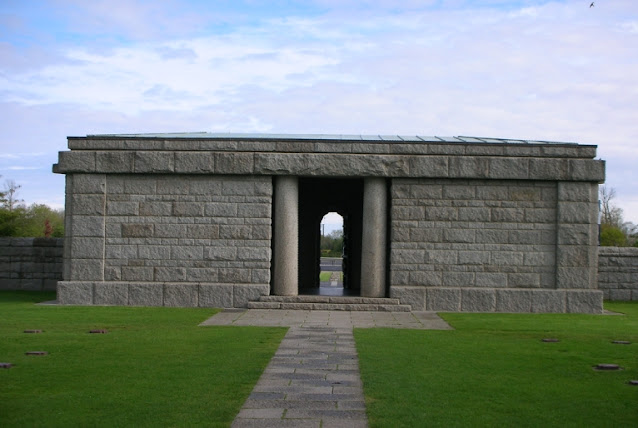 |
| Die Deutsche Kriegsgräberstätte La Cambe in der Normandie |
Die Grabstätte von Michael Wittmann und seiner Besatzung befindet sich im Block 47, Reihe 3, Grab 120. Vom Haupteingang aus gesehen liegt das Grab auf der rechten Seite des Friedhofs und wird regelmäßig von Militärhistorikern, Sammlern und Besuchern aufgesucht, die sich für die Geschichte des Tiger 007 interessieren.
 |
Das provisorische Grab der Besatzung von Michael Wittmann auf der Deutschen Kriegsgräberstätte La Cambe |
 |
| Im Juni 1983 auf der Deutschen Kriegsgräberstätte La Cambe. Veteranen der 1. SS-Panzer-Division „Leibstandarte SS Adolf Hitler“ und der 12. SS-Panzer-Division „Hitlerjugend“ der HIAG erweisen der Besatzung des Tiger 007 die letzte Ehre. In der Mitte des Fotos befindet sich SS-Obersturmbannführer Hubert Meyer von der 12. SS-Panzer-Division „Hitlerjugend“, der am 16. November 2012 verstorben ist |
Von den fünf Besatzungsmitgliedern des Tiger 007 konnten nach der Wiederentdeckung der sterblichen Überreste im Jahr 1983 drei Männer zweifelsfrei identifiziert werden: SS-Hauptsturmführer Michael Wittmann, SS-Unterscharführer Heinrich Reimers und SS-Sturmmann Rudolf Hirschel.
Da die sterblichen Überreste der Besatzungsmitglieder durch die Zerstörung des Panzers und die jahrzehntelange Liegezeit im Boden stark vermischt waren, konnten nicht alle Gebeine eindeutig einzelnen Personen zugeordnet werden. Aus diesem Grund wurden die fünf Besatzungsmitglieder gemeinsam in einem Gemeinschaftsgrab auf der Deutschen Kriegsgräberstätte La Cambe beigesetzt.
Heute erinnert die Grabstätte an die Besatzung des berühmten Tiger 007 und gehört zu den meistbesuchten Gräbern auf dem Friedhof von La Cambe.
Die Grabplatte von Michael Wittmann in La Cambe – Die bekannten Vorfälle
Im Juli 2015 (17 Juli) wurde erstmals bekannt, dass die Grabplatte von Michael Wittmann entwendet wurde. Der Vorfall wurde von französischen und internationalen Medien sowie lokalen Quellen bestätigt. Die Platte war am Grab im Bereich Block 47 befestigt und wurde offenbar gezielt entfernt. Sie wurde anschließend ersetzt.
 |
| 2015. Die fehlende Grabplatte Michael Wittmann wurde von Kriminellen gestohlen. |
Im Jahr 2018 (27-28 Mai 2018) wurde erneut über eine Beschädigung bzw. das Verschwinden der Grabkennzeichnung berichtet. Auch dieser Vorfall wurde in der regionalen Presse in der Normandie erwähnt, wobei die genauen Umstände nicht vollständig öffentlich dokumentiert sind.
Der Volksbund selbst veröffentlicht in der Regel keine detaillierten Fallberichte zu einzelnen Vandalismus- oder Diebstahlsfällen, bestätigt jedoch die laufende Instandhaltung und den wiederholten Ersatz beschädigter oder entwendeter Grabmarkierungen auf dem Gelände.
Die Vorfälle zeigen die besondere öffentliche Aufmerksamkeit, die das Grab von Michael Wittmann bis heute erhält, sowie die Herausforderungen beim Schutz von Erinnerungsorten auf stark besuchten Kriegsgräberstätten wie La Cambe.
Das Grab von SS-Sturmmann Günter Boldt
Während unseres Besuchs auf der Deutschen Kriegsgräberstätte La Cambe lohnt sich auch ein Gang zum Block 27, Grab 169. Dort befindet sich die letzte Ruhestätte von SS-Sturmmann Günter Boldt, geboren am 23. Januar 1925 in Königsberg und gefallen am 20. Juli 1944 in der Normandie.
 |
| SS-Sturmmann Günter Boldt an der Invasionsfront. Normandie, Sommer 1944 |
Günter Boldt war als Ladeschütze Mitglied der Besatzung von SS-Hauptsturmführer Michael Wittmann und nahm an den Gefechten bei Villers-Bocage teil, die Wittmann zu einer der bekanntesten Persönlichkeiten der deutschen Panzertruppe machten.
Nach den Kämpfen von Villers-Bocage wurde Boldt einer anderen Besatzung der 2./schwere SS-Panzer-Abteilung 101 zugeteilt. Am 20. Juli 1944 geriet sein Tiger I während der schweren Kämpfe südlich von Caen im Raum Tilly-la-Campagne unter feindliches Feuer und wurde schwer getroffen.
Zeitzeugenberichten zufolge erlitt Günter Boldt dabei schwerste Verwundungen. Obwohl ihm durch die Explosion ein Fuß abgerissen wurde, gelang es ihm noch, den brennenden Panzer aus eigener Kraft zu verlassen und sich einige Meter vom Fahrzeug wegzuschleppen. Wenige Stunden später erlag er seinen Verletzungen.
 |
| In diesem Tiger I "321" wurde Günter Boldt tödlich verwundet. |
Wie viele Angehörige der schweren SS-Panzer-Abteilung 101 hatte auch Günter Boldt bereits umfangreiche Fronterfahrung gesammelt. Er war Veteran der Ostfront und wurde für seine Einsätze mit dem Eisernen Kreuz 2. Klasse sowie dem Eisernen Kreuz 1. Klasse ausgezeichnet.
Sein Grab in La Cambe erinnert heute an einen der jüngsten Besatzungsangehörigen, die im Umfeld von Michael Wittmann dienten und während der Kämpfe in der Normandie ihr Leben verloren.
Tiger Ausf. E: Die wichtigsten Fakten im Überblick
Der Panzerkampfwagen VI Tiger Ausf. E galt als einer der kampfstärksten schweren Panzer des Zweiten Weltkrieges. Seine 8,8-cm-Kampfwagenkanone KwK 36 ermöglichte die Bekämpfung feindlicher Panzer auf große Entfernungen, während die starke Panzerung einen wirksamen Schutz gegen die meisten alliierten Panzerabwehrwaffen bot. Die hohe Feuerkraft und Panzerung gingen jedoch mit einem beträchtlichen Gewicht, hohem Kraftstoffverbrauch und erheblichem Wartungsaufwand einher. Trotz dieser Nachteile blieb der Tiger I bis zum Kriegsende ein gefürchteter Gegner auf allen Kriegsschauplätzen.
 |
| Ein perfekt getarnter Tiger I ist zum Angriff bereit. |
Major Hans-Joachim Schwaner von der schw. Panzer-Abteilung 502 schildert eines der Probleme des Tiger I :
"Der Motor des Pz.Kpfwg. VI (Tiger) wird thermisch bis zum Äußersten beansprucht (10 PS/t, gegenüber Stu.Gesch.: 15 PS/t) und hat infolgedessen nur eine sehr begrenzte Lebensdauer. Die oben erwähnten täglichen Märsche bei Temperaturen bis zu 35 Grad Celsius sind daher technisch nicht tragbar. Trotz der Einstellung der Ventilatoren auf eine höhere Drehzahl war die Kühlung unter dieser starken Beanspruchung nicht ausreichend. 75 % der in Marsch befindlichen Pz.Kpfwg. VI fielen infolge von Motorbränden aus, die im Wesentlichen durch Ölverluste des Motors und durch Zerstörungen der Vergaser (Vergaserbrand) verursacht wurden.
Aus den Motorbränden ergaben sich folgende Motorschäden:
Die zentralen Zerstäuberdüsen schmolzen vollständig; in 2 Fällen waren die Drosselklappen geschmolzen; ferner verbrannten die Anschlussleitungen des Kühlwassers sowie die Gummidichtungen zwischen Vergaser und Luftfilter; die Zündkabel sowie das Hauptkabel des Anlassers wurden in den meisten Fällen so stark beschädigt, dass ein Austausch erforderlich wurde. Dem einwandfreien Funktionieren der automatischen Feuerlöschanlage ist es zuzuschreiben, dass keine schwereren Brandschäden eintraten.
Die starke und langandauernde Beanspruchung der Seitenvorgelege bei großer Hitze hatte eine Ölverdünnung bis zu unerträglichen Grenzen zur Folge, was Verzögerungen beim Gangwechsel und manchmal sogar das Nichteinlegen einzelner Gänge verursachte. Die häufigen Verzögerungen beim Gangwechsel führten oftmals zu Schäden an den Getriebeaggregaten, wodurch das Abschleppen des Pz.Kpfwg. erforderlich wurde."
Lange Märsche bei großer Hitze verursachen:
-
Motorbrände,
-
Zerstörungen der Vergaser,
-
Ölverluste,
-
chronische Überhitzung.
Lange Märsche zerstören buchstäblich das Laufwerk;
-
die Bandagen der Laufrollen lösen sich auf,
-
die Schwingarme brechen,
-
Abschleppvorgänge verschlimmern die Schäden zusätzlich.
Panzerkampfwagen VI Tiger I Ausf. E – Technische Daten
Typ: Schwerer Kampfpanzer
Produktionszeitraum: 1942–1944
Produktion: 1.347 Fahrzeuge
Besatzung: 5 Mann
-
Kommandant
-
Richtschütze
-
Ladeschütze
-
Fahrer
-
Funker / Bug-MG-Schütze
Abmessungen:
-
Länge (mit Kanone): 8,45 m
-
Breite: 3,70 m
-
Höhe: 3,00 m
Gefechtsgewicht:
Panzerung:
-
Wannenfront: 100 mm
-
Wannenseiten: 80 mm
-
Wannenheck: 80 mm
-
Turmfront: 100 mm
-
Turmseiten: 80 mm
-
Turmheck: 80 mm
Hauptbewaffnung:
-
8,8 cm KwK 36 L/56
-
Munitionsvorrat: 92 Schuss
-
Munition: Panzergranaten (PzGr.) und Sprenggranaten (Sprgr.)
Sekundärbewaffnung:
-
2 × MG 34 (7,92 mm)
-
Munitionsvorrat: bis zu 5.700 Patronen
Motor:
-
Maybach HL 230 P45
-
12-Zylinder-V-Motor (Ottomotor)
-
Leistung: 700 PS bei 3.000 U/min
Getriebe:
-
Maybach OLVAR OG 40 12 16 B
-
8 Vorwärtsgänge, 4 Rückwärtsgänge
Leistungen:
-
Höchstgeschwindigkeit Straße: 38 km/h
-
Höchstgeschwindigkeit Gelände: 20–25 km/h
-
Reichweite Straße: bis zu 195 km
-
Reichweite Gelände: ca. 110 km
Federung:
Kraftstoffvorrat:
Kraftstoffverbrauch:
-
Etwa 2,7 bis 4,5 Liter pro Kilometer, abhängig vom Gelände
Wo stehen heute noch Tiger-I-Panzer ? Die letzten erhaltenen Fahrzeuge in Europa
HistoReich hat bereits zwei ausführliche Artikel über den Panzerkampfwagen VI Tiger Ausf. E veröffentlicht, den Panzer, der Michael Wittmann berühmt gemacht hat. Einer dieser Tiger I, der zum 102. SS-Panzerregiment gehörte, ist heute im Panzermuseum von Saumur ausgestellt. Ein weiterer Panzer befindet sich in der Nähe der normannischen Stadt Vimoutiers, wo er als Freiluftdenkmal ausgestellt ist.
Ein weiterer Panzer befindet sich in der Nähe der normannischen Stadt Vimoutiers (s.Pz-Abt 503), wo er als Freiluftdenkmal ausgestellt ist.
Diese beiden Fahrzeuge gehören zu den wenigen weltweit erhaltenen Tiger I und erinnern noch heute an die erbitterten Kämpfe des Sommers 1944 in der Normandie.
Das Panzermuseum in Münster zeigt in seiner beeindruckenden Sammlung von Zeit zu Zeit einen Tiger I. Ich habe einen Artikel über den im Jahr 2004 ausgestellten Tiger Ausf. E verfasst, den Sie hier nachlesen können.
 |
| Der Tiger I wird in Münster nur vorübergehend ausgestel |
Fazit
Mehr als achtzig Jahre nach den Kämpfen in der Normandie fasziniert die Geschichte von Michael Wittmann und der Besatzung des Tiger 007 noch immer Militärhistoriker und Geschichtsinteressierte auf der ganzen Welt. Hinter der Legende des berühmten Tiger-Kommandanten stehen jedoch fünf Männer, deren Schicksal am 8. August 1944 auf den Feldern von Gaumesnil besiegelt wurde.
Die Wiederentdeckung ihrer sterblichen Überreste im Jahr 1983 beendete eine fast vierzigjährige Suche und ermöglichte es, eines der bekanntesten ungelösten Kapitel der Normandie-Schlacht aufzuklären. Dank der Arbeit von Historikern, Zeitzeugen und des Volksbundes Deutsche Kriegsgräberfürsorge konnten Michael Wittmann und seine Besatzung schließlich identifiziert und auf der Deutschen Kriegsgräberstätte La Cambe beigesetzt werden.
Heute erinnern die Gräber in La Cambe, die Überreste der Schlachtfelder von Gaumesnil und die wenigen erhaltenen Tiger I in europäischen Museen an die Ereignisse des Sommers 1944.


.jpg)


.jpg "Messerschmitt Bf 109 E-3 du Deutsches Museum de Munich")
.jpg)
.jpg "Train d'atterrissage du Messerschmitt Bf 109 E-3 au Deutsches Museum de Munich")
.jpg)
.jpg "Messerschmitt Bf 109E-1 modifié E-3 au Deutsches Museum de Munich")
.jpg)
.jpg "Verrière du Messerschmitt Bf 109 E-3 au Deutsches Museum de Munich")
.jpg "marquage tactique du Geschwaderkommodore Mölders du Messerschmitt Bf 109 E-3 au Deutsches Museum de Munich")
.jpg "Messerschmitt Bf 109 E-3 au Deutsches Museum de Munich")
.jpg "L'empennage du Messerschmitt Bf 109 WNr 790 du deutsches Museum de Münich")
.jpg "Arrière du Messerschmitt Bf 109 E-3 au Deutsches Museum de Munich")
.jpg)


